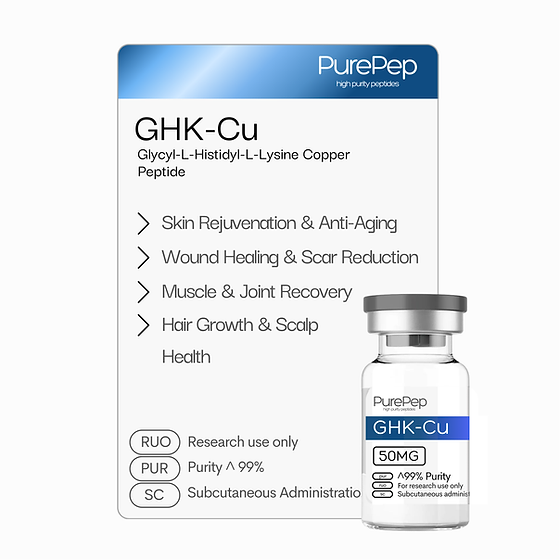
Improvement of Skin Texture and Tone : Clinical and preclinical data indicate that GHK-Cu can reduce fine lines, wrinkles, and skin roughness through enhanced collagen matrix formation and hydration
This gap underscores the need for comprehensive comparative studies to gain a deeper understanding of how peptide size and complexity impact therapeutic outcomes in wound healing
Next step If the topic still fits your goal after reading, the get-started flow should collect the clinical context needed for provider review
Hypotension (Low Blood Pressure): Some anecdotal reports and preliminary data suggest GHK-Cu can have a mild vasodilatory effect, which could potentially lower blood pressure
To evaluate the healing efficacy, a comprehensive experiment was conducted on diabetic wounds treated with various agents, including: i) PBS as negative control (NC group), ii) ROS-responsive hydrogel matrix (G group), iii) monomer copper peptides M-CuP solution (M-CuP group), iv) dimeric copper peptides D-CuP solution (D-CuP group), v) ROS-responsive hydrogel with monomer copper peptides M-CuP (G/M-CuP group), and vi) ROS-responsive hydrogel with dimeric copper peptides (G/D-CuP group)
During wound healing, MMPs play dual roles: they facilitate tissue debridement and cell migration in early healing phases, while excessive or prolonged MMP activity can impair matrix deposition and delay closure